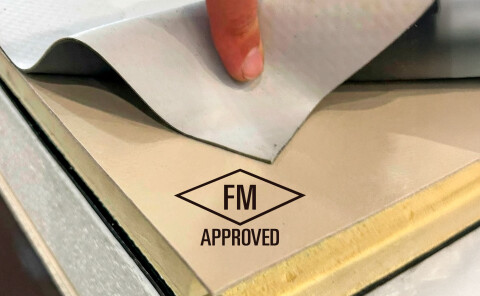

Discover our solutions for fully fire-safe 🔥 roofs
1-7-2025
AllShield BarrierSheet achieves Broof(t1) classification — Safer, insurable flat roofs with solar panels
Flat roofs with solar panels offer major benefits in renewable energy, but they also increase the risk of roof fires. For building owners and insurers, it is crucial that flat roofs are not only watertight but also fire-safe and insurable.
AllShield Coatings is proud to announce that the BarrierSheet fire barrier system has now achieved EN 13501-5 Broof(t1) classification after a series of tests at Efectis Bleiswijk. This result is particularly important for Germany, where Broof(t1) certification is required for flat roofs to be accepted by authorities and insurance companies. With this step, AllShield strengthens its position as the leading solution for fire-safe, insurable roofs with solar panel installations.
Fire test highlights
The tested roof build-up included a PVC waterproofing layer, the AllShield BarrierSheet, and InSus PIR insulation. Under the CEN/TS 1187 Test 1 scenario (exposure to burning brands combined with wind), the BarrierSheet successfully stopped the flames from reaching the insulation. Within just 4 to 6 minutes, the fire self-extinguished, showing that the roof system can prevent larger fires from developing.
This demonstrates why an intermediate non-combustible layer is essential: even the best waterproofing membranes and FM-rated insulation materials add fuel to a fire once ignition occurs. Without additional protection, fires can easily jump from one solar panel to the next. With BarrierSheet in place, the fire is contained, protecting the building, its occupants, and its insurability.
What is Broof(t1) and why it matters for Germany
EN 13501-5 Broof(t1) is the European fire classification standard required in Germany for flat roofs. It simulates burning brands landing on the roof surface with wind influence, and assesses whether flames spread across the roof, penetrate into the insulation, or produce burning droplets.
Passing this test means that the roof assembly is considered resistant to external fire sources and suitable for approval by local building codes and insurers. For companies investing in solar energy, Broof(t1) compliance is often a prerequisite to secure project approval and affordable insurance.
Results of the Efectis testing
-
All four CEN/TS 1187 Test 1 scenarios were successfully completed.
-
The tested system (PVC + BarrierSheet + InSus PIR) achieved Broof(t1) classification under EN 13501-5.
-
BarrierSheet prevented fire spread and self-extinguished flames within minutes.
This outcome demonstrates that BarrierSheet provides a durable fire barrier that remains intact during fire exposure, unlike gypsum-based solutions that degrade over time.
Why BarrierSheet Is different
-
Ultra-thin and lightweight (only ~2.5 mm and 2 kg/m²) – ideal for both new and older roofs with limited load capacity.
-
Withstands extreme heat up to 1300°C without degrading.
-
Easy installation with just a few screws, no pre-drilling needed.
-
EN 13501-5 Broof(t1) certified, making roofs compliant and insurable even with solar panels.
Building safer and insurable roofs with solar panels
BarrierSheets have already been tested extensively in the Netherlands and by ZAG Slovenia, but achieving Broof(t1) in Germany is a critical milestone. Each country can require its own certification, and this test clears the path for AllShield BarrierSheet to be accepted across Germany.
For building owners, developers, and insurers, this means:
- Safer roofs with solar panelsLower risk of large roof fires
- Extended lifetime of the roof structure
-
Compliance with German and European regulations
-
Improved insurability of commercial properties
In Germany BarrierSheets provide fire safety
- With the successful Broof(t1) classification at Efectis, AllShield BarrierSheet confirms its position as the go-to fire barrier for flat roofs with solar panels. It protects against the risk of roof fires, ensures compliance with strict European standards, and helps businesses secure the insurance coverage they need.
- BarrierSheet makes it possible to combine sustainability and safety: a roof that produces clean energy, resists fire, and remains fully insurable.
Our roof fire 🔥 protection solutions
Fire safety is the goal, insurability is the result
Flat roofs – especially those with solar panels – face an increasing fire risk. Even the best fire-retardant membranes offer limited protection against flying sparks or thermal ignition beneath PV panels. That’s why AllShield developed two non-combustible fire protection systems, each tailored to a specific application.
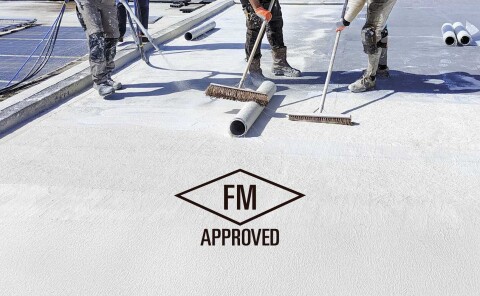
Do you have any questions for us?
We're here for you!
