
Discover our solutions for fully fire-safe 🔥 roofs
1-4-2025
Rooftop solar fire incidents — Q1 2025
From January–March 2025 we tracked significant rooftop PV fire incidents worldwide on commercial and agricultural buildings. Each entry lists date, what burned, where, suspected cause when known, and notable consequences like roof damage, smoke, water-damage, or PV debris.
AllShield Tracker: Stopping Rooftop PV Fires with Blue & BarrierSheets (Q1 2025)
We publish this list because transparency and learning are essential to making solar roofs truly fire-safe. By documenting incidents systematically, we spot recurring patterns (ignition points, roof build-ups, firefighting tactics) and turn them into practical improvements. From that same mission we developed AllShield Blue and BarrierSheets—passive, non-combustible underlayers that smother incipient roof fires and limit spread beneath PV fields, where other measures often help only partially.
On this page you’ll find a curated set of major Q1 2025 incidents worldwide where damage went beyond the panels. For each case we list the date, what burned, and the location, plus the suspected cause (when known) and the consequences—such as downtime, roof/insulation or interior damage, suppression-related impacts, and PV debris dispersion. Items are sorted newest first and updated as validated information becomes available, with a primary source cited for verification.
Q1 2025 – Rooftop Fires with PV
March 20, 2025 — PV system on fruit warehouse — Laas (Lasa), Italy. A fierce roof fire at the fruit cooperative’s warehouse caused black smoke; the fire brigade prevented worse by intervening quickly. Suspected technical cause in the PV zone; parts of roofing and insulation were affected. See the Il Dolomiti report with photos.
March 11, 2025 — PV modules on industrial building (flat roof) — Heilbronn, Germany. Several PV modules caught fire on a company roof in the Böllinger Höfe industrial area; the fire brigade had to open bitumen and remove EPS insulation to stop smoldering—typical extinguishing damage with warm roof buildups. Source: incident report Kreisfeuerwehrverband Heilbronn.
March 6, 2025 — Smoldering PV cables and roofing/insulation — Lommel, Belgium. Cables under the solar panels started smoldering; roofing and insulation smoked as well. Rapid deployment prevented fire spread into the hall, but roof repairs are needed. Source: regional news via Het Belang van Limburg.
March 4, 2025 — PV on warehouse roof — Norden, Germany. Fire in a ~100 m long PV field led to hours of deployment with two water cannons; parts of roofing were damaged and had to be opened. Source: fire brigade report Feuerwehr Norden. Extra context: analysis in Feuerwehr-Magazin.
March 4, 2025 — PV installation heavily damaged at capannone — Marene (Cuneo), Italy. Nighttime hall fire struck the agricultural machinery workshop; PV installation on the roof destroyed, with structural roof damage. Source: Rai TGR Piemonte coverage.
February 24, 2025 — PV roof fire on Lagerhalle — Rottenmann/Singsdorf, Austria. Alarm by fire alarm system; fire on PV field of a storage hall. Intervention required opening roof layers to stop after-glow; operational interruption for inspection. Source: deployment report FF Rottenmann/Singsdorf.
February 20, 2025 — PV on industrial roof with toxic smoke — Nauen, Germany. Fire/smoke under solar panels led to warnings for residents to close windows; roof parts and insulation damaged. Source: MAZ-online report.
February 9, 2025 — PV on warehouse; extinguishing water damages seeds — Greußen, Germany. Fire destroyed approx. 30 m² PV; tons of seed stock inside the hall suffered water damage from firefighting—special type of business loss. Source: dpa report via ZEIT Online.
January 30, 2025 — PV on roof burning (agricultural/industrial) — Jelcza-Wielka, Poland. Roof-PV fire fought with mist jets; roof layer locally opened to prevent smoldering; short-term business standstill. Source: Jelcz-Laskowice fire brigade excerpt.
January 21, 2025 — Smoldering fire in PV roof — Werl, Germany. Glowing fire in PV zone; roof inspected and partially opened, limited structural damage but repairs required. Source: Soester Anzeiger report.
January 18, 2025 — PV installation on production hall — Hepberg/Kösching, Germany. Fire on PV installation of a production company; roof opened by emergency services to prevent spread; roof repairs required. Source: Feuerwehr Lenting report (Facebook).
January 10, 2025 — Possible short circuit at warehouse solar panels — Barneveld, Netherlands. Fire in warehouse of a concrete company; suspected short circuit in PV. Quickly under control, but smoke/soot damage and inspection of roof/electrics required. Source: 112Nederland report.
January 4–5, 2025 — Batteries (BESS) linked to PV, explosion and smoke — Gandía (Valencia), Spain. Fire in battery zone of building with PV caused explosion; neighborhood temporarily confined due to smoke; one firefighter slightly injured; long cooling down. Source: Cadena SER Radio Gandía report.
March 2025 — PV installation on hall, quickly extinguished — Vienna, Austria. PV on hall in Freudenauer Hafenstraße caught fire; quickly under control, limited roof damage but inspection and repair required. Source: ORF Wien news.
March 4, 2025 — Two PV fires on Rosenmontag — Norden & Erftstadt, Germany. Overview article: major deployment in Norden (see above) and a garage fire next to PV in Erftstadt; illustrates length of interventions and need for roof opening. Source: pv magazine summary.
What this quarter again confirms
Also in Q1 2025 we see the same pattern: failures in cabling/connectors, local hotspots quickly spreading under PV across combustible roofing, and collateral damage from firefighting (opening bitumen/EPS) or particle fallout in the environment. Prevention helps—good installation, periodic thermography, connector upgrades, and safe walkways—but fire spread can only be structurally stopped with a non-combustible, continuous underlayer beneath PV fields. That is exactly what AllShield Blue and BarrierSheets focus on: smothering rooftop fires at inception and limiting business interruption and cleanup costs.
Do you have a verified case missing here? Send us the link; we will review and add it. For continuity you can use the index to previous quarters (Q1 2024 → present) and our methodology.
Our roof fire 🔥 protection solutions
Fire safety is the goal, insurability is the result
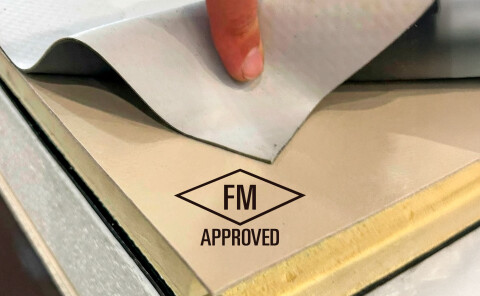
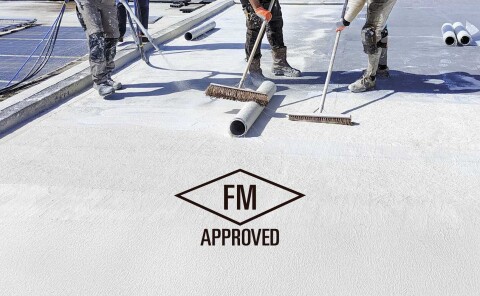
Flat roofs – especially those with solar panels – face an increasing fire risk. Even the best fire-retardant membranes offer limited protection against flying sparks or thermal ignition beneath PV panels. That’s why AllShield developed two non-combustible fire protection systems, each tailored to a specific application.
Do you have any questions for us?
We're here for you!
