
Discover our solutions for fully fire-safe 🔥 roofs
17-3-2026
Evolution of thinking on PV roof fire safety over the past 30 years and the future
Fire safety thinking for rooftop solar has evolved significantly over the past three decades. What started as a focus on electrical faults in PV systems has gradually expanded into a broader understanding of installation quality, ageing systems and the interaction between PV arrays and roof constructions. This article explains the four phases of PV fire safety thinking and what the next phase may look like.
Over the past three decades, the way the industry thinks about PV roof fire safety has evolved significantly. Early research focused almost entirely on preventing electrical failures in PV systems. Over time it became clear that rooftop solar fire risk is influenced by many more factors than electrical components alone.
As rooftop solar installations became larger and more common on commercial and industrial buildings, the understanding of fire risk gradually expanded. What started as a discussion about electrical faults has evolved into a broader discussion about installation quality, ageing systems and the interaction between PV systems and roof constructions.
The development of solar roof fire safety thinking can roughly be described in four phases.
Phase 1 – component failures
In the early years of PV deployment research focused primarily on failures in electrical components.
Investigations into PV-related fires showed that many incidents originated in connectors, DC isolators, inverters or damaged cabling. Studies such as those from the Building Research Establishment indicate that a large proportion of PV fires can be traced back to these components.
The main strategy during this phase was therefore straightforward.
Prevent electrical ignition.
This led to improvements in:
-
connector design
-
electrical standards
-
component certification
-
monitoring systems
These improvements significantly reduced the probability of electrical faults, but they did not eliminate PV system fire risk completely.
Phase 2 – installation quality
As PV deployment expanded rapidly researchers and insurers began to recognise the importance of installation quality.
Many incidents were linked not only to component design but also to:
-
incorrect connector assembly
-
poor cable routing
-
mechanical stress on cables
-
installation errors during commissioning
This phase shifted the focus towards human factors in system installation.
Industry guidelines increasingly emphasised:
-
installer training
-
installation standards
-
inspection during commissioning
-
improved installation procedures
Improving installation quality became an important step in reducing rooftop solar fire risk.
However even well installed systems continue to age over time.
Phase 3 – inspection and maintenance
The next phase of research addressed the reality that PV systems typically remain in service for 25–35 years.
Over time systems can deteriorate due to:
-
thermal cycling
-
UV exposure
-
moisture ingress
-
dirt accumulation
-
animal activity
-
mechanical damage
This led to increased emphasis on inspection and maintenance as an essential part of PV fire safety management.
Technologies introduced during this phase include:
-
thermal imaging inspections
-
drone based surveys
-
electrical monitoring
-
predictive maintenance
Even with good inspection and maintenance, local ignition events cannot always be completely prevented.
Phase 4 – roof system behaviour
More recent research has shifted attention from the PV system itself to the interaction between PV installations and the roof construction.
Experiments and fire investigations show that PV arrays can alter fire dynamics by trapping heat and flames close to the roof surface. The behaviour of the underlying roof assembly therefore becomes a critical factor in determining whether a fire remains localised or spreads across the roof.
Current research increasingly focuses on:
-
fire spread under solar panels
-
system level fire behaviour
-
interaction between PV systems and roof insulation
-
large scale fire testing of complete roof assemblies
This represents a shift from analysing individual components to understanding the entire PV roof system.
The next step – resilient roof design
Fire safety is no longer just a checklist for electricians. It is becoming a fundamental design criterion for architects and building owners.
Rather than assuming that ignition can always be prevented the industry is increasingly asking a different question.
How can roofs be designed so that a local ignition does not escalate into a large roof fire.
This approach focuses on:
-
consequence limiting design
-
fire safe solar roofs
-
non-combustible roof assemblies
-
fire resistant barrier layers under solar panels
-
integrated PV roof fire engineering
As solar installations continue to grow worldwide designing resilient PV roof systems may become one of the most important developments in future PV roof fire safety research.
Key takeaways
-
PV roof fire safety thinking has evolved significantly over the past 30 years.
-
Early research focused mainly on electrical component failures in PV systems.
-
Installation quality later became recognised as a critical factor in reducing rooftop solar fire risk.
-
Long term inspection and maintenance are essential because PV systems remain on roofs for decades.
-
Recent research shows that the interaction between PV arrays and roof construction determines how fires develop.
-
The next phase of PV fire safety will likely focus on resilient and fire safe solar roofs that limit fire escalation.
Frequently asked questions about PV roof fire safety
Can solar panels cause roof fires?
Solar panels themselves rarely ignite. However electrical faults in connectors, DC isolators, inverters or damaged cabling can cause ignition events in photovoltaic systems. If combustible materials are present in the roof construction, a small electrical fault can potentially develop into a larger roof fire.
What causes most PV roof fires?
Most PV roof fires originate from electrical faults in the DC system. These faults are often related to connectors, isolators, damaged cables or installation errors. Over time ageing, environmental exposure and mechanical damage can increase the probability of such failures.
Does the roof construction influence PV fire risk?
Yes. Research increasingly shows that the behaviour of the roof assembly plays an important role in how a fire develops. When combustible roof layers are present, fire can spread more easily beneath PV arrays. Non-combustible roof assemblies can help limit the escalation of a local ignition.
Why can fires spread under solar panels?
PV panels can trap heat and flames close to the roof surface. This is sometimes described as an “oven effect”. Because the space under the panels can restrict ventilation, heat can accumulate and increase the intensity of a fire on the roof surface.
How can rooftop solar fire risk be reduced?
Rooftop solar fire risk can be reduced by combining several safety measures:
-
high quality electrical components
-
correct installation procedures
-
regular inspection and maintenance
-
monitoring of system performance
-
fire resistant or non-combustible roof constructions
This system approach is increasingly recognised as an effective strategy in PV fire safety engineering.
Are non-combustible roofs important under solar panels?
Non-combustible roof assemblies can play an important role in limiting fire spread beneath PV systems. When ignition occurs, the behaviour of the roof layers often determines whether the fire remains localised or spreads across the roof surface.
Our roof fire 🔥 protection solutions
Fire safety is the goal, insurability is the result
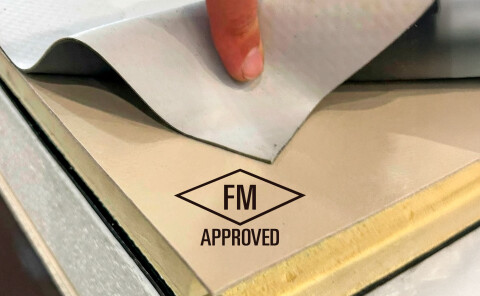
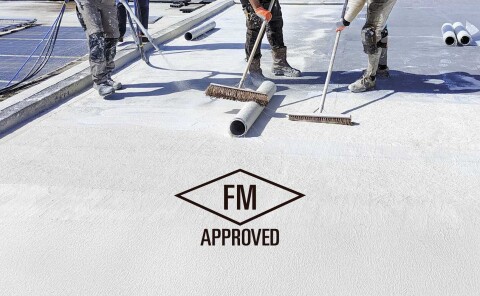
Flat roofs – especially those with solar panels – face an increasing fire risk. Even the best fire-retardant membranes offer limited protection against flying sparks or thermal ignition beneath PV panels. That’s why AllShield developed two non-combustible fire protection systems, each tailored to a specific application.
Do you have any questions for us?
We're here for you!
