
Discover our solutions for fully fire-safe 🔥 roofs
22-8-2025
Fire risks of solar panels on flat industial roofs
Solar panels on flat roofs come in many types: glass–glass, glass–foil, plastic and more. Each reacts differently to fire - but all depend on the roof beneath them. AllShield makes roofs inherently non-combustible, ensuring solar energy is both safe and insurable.
Understanding different types - and why only non-combustible roofs stop fire spread
Flat roofs are increasingly used for solar energy production. But not all solar panels are the same - especially when it comes to fire behavior. The type of panel construction determines not only durability and efficiency, but also how panels react in case of fire.
Below we outline the main types of solar panels found on flat roofs, their construction, advantages, and their behavior in case of fire.
| Glass–foil (glass–backsheet) | Tempered glass front; polymer foil back | Lightweight, cost-efficient, most common type | Backsheet ignites and melts, dripping flaming plastic onto roof | Medium risk: fast ignition if roof is combustible |
| Glass–glass | Tempered glass front & back; polymer encapsulant inside | Durable, moisture resistant, longer lifetime | Less combustible, but encapsulants and junction boxes can still ignite | Lower risk, but not non-combustible |
| Plastic-based / lightweight | Fully polymer layers, sometimes thin foil on top | Very light, suitable for weak roofs | Highly combustible, can sustain fire on their own | High risk, fastest spread |
| Thin-film (CdTe, a-Si, CIGS) | Thin semiconductor on glass or plastic substrate | Flexible options, some cheaper | Glass-based = stable; plastic-based = highly flammable encapsulant | Varies: moderate (glass) to high (plastic) |
| BIPV (Building Integrated PV) | PV integrated into roof covering (tiles, plates) | Aesthetic, no ballast needed | Fire transfers directly into roof structure, often above insulation | High risk if insulation is combustible |
| Framed modules | Glass–foil or glass–glass in aluminium frame, on plastic supports | Standard mounting system | Frame non-combustible, but supports/cables burn; drips ignite roof surface | Depends on roof: risk of rapid spread |
| Flexible film modules | Thin PV on flexible polymer sheet, glued to roof surface | Very light, easy installation | High plastic content → very flammable, quick ignition | Very high risk, especially on bitumen/EPS roofs |
What happens during a fire
Ignition
A rooftop fire almost always begins small. The ignition point is typically an electrical fault: a loose connector, a damaged cable, or a hot spot inside a module. In plastic-rich panels such as glass–foil or flexible modules, the backsheet or encapsulant can ignite quickly. Glass–glass panels resist ignition longer, but once temperatures rise high enough, even their polymer layers start to burn.
First flame development
From this first spark, visible flames soon appear near the junction box or connectors. In glass–foil panels, the burning backsheet often melts and drips flaming plastic onto the roof surface. On combustible roofing systems with bitumen or EPS insulation, these droplets can ignite the membrane almost instantly, turning a module fault into a roof fire.
Heat build-up beneath the array
The way panels are mounted above the roof creates a dangerous effect: the modules form a lid, trapping heat and smoke in the space below. This accelerates the heating of the roof covering. Once the membrane or insulation reaches ignition temperature, fire spreads rapidly across the roof — following the roof layers rather than the panels themselves.
Smoke and toxicity
As the fire grows, thick black smoke is produced. Burning plastics in panels, cables, and encapsulants release dense, toxic fumes that limit visibility, endanger firefighters, and pose health risks to occupants and neighbors.
Escalation
This chain reaction means a small electrical fault under a single solar panel can escalate within minutes into a full-roof fire if the roof itself is combustible. The determining factor is not the panel type alone, but the fire behavior of the roof beneath it.
The real common factor: the roof itself
Whether glass–glass, glass–foil, thin-film or plastic-based, no solar panel is completely fire safe. The decisive factor is the roof. A combustible roof turns a local PV fire into a catastrophic blaze. A non-combustible roof system prevents that escalation, regardless of the solar technology used.
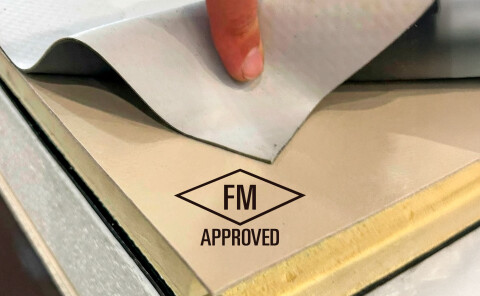
That is why AllShield BarrierSheet and AllShield Blue are critical: they turn vulnerable flat roofs into non-combustible, insurable platforms for solar energy.
Solar panels and fire risk
Solar panel types vary in fire behavior:
-
Plastic-heavy panels (foil-back, flexible, lightweight): ignite and spread fastest.
-
Glass–glass modules: somewhat safer, but not immune.
-
Thin-film: depends strongly on the substrate.
-
BIPV: can expose insulation directly to fire.
But in the end, all solar panels rely on the roof beneath them. Only when that roof is non-combustible can a small ignition be prevented from spreading into a devastating rooftop fire.
Our roof fire 🔥 protection solutions
Fire safety is the goal, insurability is the result
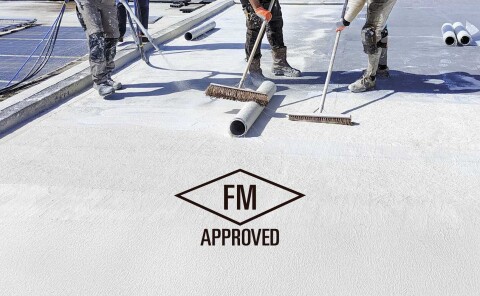
Flat roofs – especially those with solar panels – face an increasing fire risk. Even the best fire-retardant membranes offer limited protection against flying sparks or thermal ignition beneath PV panels. That’s why AllShield developed two non-combustible fire protection systems, each tailored to a specific application.
Do you have any questions for us?
We're here for you!
