
Discover our solutions for fully fire-safe 🔥 roofs
16-9-2025
PV fire risks across Europe: Different triggers, one solution
PV fire risks don’t stop at borders. In Austria hail, in Spain heat, in Poland rapid installs, triggers differ, but spread is always through combustible roofs. AllShield BarrierSheet cover boards stop fire penetration and make solar rooftops insurable across Europe.
Solar rooftop fires don’t all start the same way. In Austria, hail damage is a frequent trigger. In Spain, extreme heat and UV accelerate material fatigue. In Poland, rapid mass adoption sometimes leads to quality gaps in installation. Each market has its own story. But despite these differences, the way a fire develops is universal: once it reaches combustible roofing materials, it spreads uncontrollably. AllShield BarrierSheet cover boards are designed to ensure that never happens.
Why this article?
Across Europe, insurers, risk managers, and building owners regularly ask a similar question: “Do we face the same risks as our neighbours?” The answer is both yes and no.
The starting point of a rooftop fire can be very different depending on where you are. In Austria or Italy, hail and UV cause cracks in modules and connectors. In Spain or Portugal, intense summer heat accelerates degradation of plastics. In Poland, the speed of PV roll-out means oversight and quality control sometimes lag behind. These are very different triggers.
Yet once ignition occurs, the outcome is always the same. As soon as a spark or hot spot comes into contact with combustible insulation, a minor defect escalates into a roof fire. That is why AllShield has collected and compared risk factors across European markets: not to show differences, but to underline the common solution. The only reliable safeguard is a non-combustible cover board layer in the roof build-up.
Regional patterns in PV fire risk
Every European market carries its own timeline of solar adoption, its own climate stresses, and its own regulatory traditions. These local factors influence when risks appear, but not what happens once they do.
In Germany and the Netherlands, mass adoption after 2010 created hundreds of thousands of commercial rooftops. These are now entering the critical 12–15 year ageing window, where connectors, cables, and modules begin to show wear.
In Italy and Austria, modules degrade faster due to hail and strong UV exposure. Failures and localised hotspots occur earlier than in more temperate climates, and several high-profile rooftop fires have already been linked to these conditions.
In Spain and Eastern Europe, the situation is different again. Rapid installation since 2018 means most systems are still young today. But by the early 2030s, this generation of rooftops will simultaneously enter the ageing phase, creating a new wave of risk.
In Scandinavia, adoption is slower and the climate is cooler, but the underlying technology is the same. Component failures will eventually appear there too, only later. The timeline shifts, the hazard does not.
PV Fire Risk Profiles Across 20 EU Countries
|
Country |
Market growth wave |
Climate stress |
Oversight |
Critical risk window |
|
Netherlands |
Fast rooftop roll-out since 2013–2015 |
Moderate hail/storms |
Scope 12 inspections |
Systems from 2013–2015 reach 12–15 yrs between 2025–2030 |
|
Germany |
Early adoption 2005–2010, strong growth 2010–2015 |
Hail south, snow north |
VDE norms, Fraunhofer data |
First large systems already 12–20 yrs old; failures already visible |
|
France |
Steady growth since 2010 |
Medium climate stress |
UTE guidelines |
Many systems still <12 yrs; risk wave expected late 2020s–2030s |
|
Italy |
Large roll-out 2010–2012, high irradiation |
Hail, UV |
Fire brigade guidance |
Systems from 2010–2012 already in 12–15 yr ageing phase |
|
Spain |
Major boom after 2018 |
Heat, UV |
Regional insurance rules |
Critical ageing around early 2030s |
|
Poland |
Explosive adoption 2019–2021 |
Hail, storms |
Limited oversight |
Critical window begins in early 2030s |
|
Belgium |
Similar to NL, growth after 2013 |
Moderate storms |
Insurer-driven |
Systems from 2013–2015 approach 12–15 yrs in 2025–2030 |
|
Sweden |
Gradual growth post-2015 |
Low hail, cold cycles |
EU norms only |
Most systems <10 yrs; risk wave mid-2030s |
|
Denmark |
Steady but smaller installs post-2015 |
Low hail |
EU norms only |
Critical phase from mid-2030s |
|
Finland |
Small market, growth after 2015 |
Cold cycles |
EU norms only |
Critical phase from mid-2030s |
|
Austria |
Mature installs since 2010 |
Hail belt, snow |
National codes |
2010–2012 systems already 12–15 yrs old |
|
Czech Republic |
Early wave 2010–2012, renewed 2019+ |
Continental storms |
Emerging |
First wave ageing now; second wave critical in 2030s |
|
Slovakia |
Growth post-2015 |
Hail storms |
Limited |
Most systems <10 yrs; critical window in 2030s |
|
Hungary |
Rapid expansion since 2018 |
Hail + heat |
Limited |
Critical phase in 2030s |
|
Portugal |
Gradual roll-out since 2012 |
Heat stress |
EU rules |
2012–2015 systems ageing; newer installs safe until 2030s |
|
Ireland |
Smaller roll-out post-2015 |
Storms, moisture |
EU rules |
Critical phase in 2030s |
|
Greece |
Major roll-out 2010–2012 |
High heat/UV |
EU rules |
First generation already >12 yrs; risks visible now |
|
Romania |
Expansion since 2018–2020 |
Storms |
Emerging |
Critical ageing expected in 2030s |
|
Bulgaria |
Smaller growth since 2015 |
Moderate climate |
EU norms |
Critical window starts 2030s |
|
Lithuania |
Mass installs after 2019 |
Low hail |
EU norms |
Critical ageing in 2030s |
The universal conclusion
Looking across these twenty countries, a simple truth emerges. Fires on solar rooftops do not respect borders. They always start in the PV components: connectors, cables, or inverters. But they only spread into a catastrophic roof fire when the underlying roof structure is combustible.
The local climate, regulations, or timing of market adoption merely determine when this risk becomes visible. The process itself is the same everywhere. The critical question is not “if” but “when.”
How AllShield solves the problem everywhere
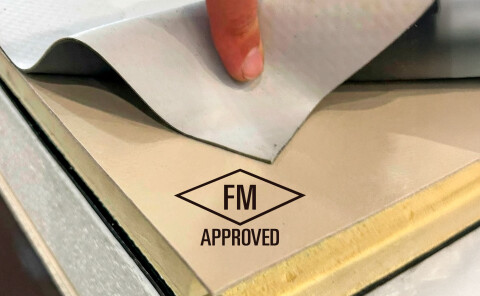
The solution is equally universal. AllShield BarrierSheet cover boards create a thin, non-combustible mineral layer above combustible insulation materials. This layer acts as a shield, preventing any ignition from entering the roof and turning a technical fault into a major fire.
In Germany, it stops a failing connector from igniting bitumen.
In Italy and Austria, it prevents hail-triggered cracks from letting fire reach EPS insulation.
In Spain or Poland, it makes today’s young rooftops future-proof, long before they reach the critical ageing phase.
Wherever the trigger, the outcome is the same: fires cannot spread into the roof. For building owners, that means long-term security. For insurers, it means confidence in offering coverage on PV-equipped rooftops without excluding fire risk.
Our roof fire 🔥 protection solutions
Fire safety is the goal, insurability is the result
Flat roofs – especially those with solar panels – face an increasing fire risk. Even the best fire-retardant membranes offer limited protection against flying sparks or thermal ignition beneath PV panels. That’s why AllShield developed two non-combustible fire protection systems, each tailored to a specific application.
Do you have any questions for us?
We're here for you!
