
Discover our solutions for fully fire-safe 🔥 roofs
1-9-2025
The 10 Leading Causes of Solar Panel Fires on Commercial Roofs
Solar panels on flat commercial roofs deliver sustainable energy, but they also introduce new fire risks. International investigations (IEA PVPS, BRE, NFPA, Australian regulators) show that technical failures combined with combustible roofing materials are the main drivers of rooftop PV fires. In this artikle we discuss the 10 leading causes of fire in commercial PV systems.
Why rooftop solar fires happen — and how to stop them with AllShield Blue and BarrierSheets
Solar panels on commercial flat roofs deliver clean energy but also introduce serious fire risks. International studies (IEA PVPS, BRE, NFPA, regulators) show the same pattern: small technical faults in PV components ignite, and flames spread rapidly across combustible roofing layers.
In this article we outline the 10 leading causes of rooftop solar fires, from connector failures to hotspots and poor installation.
The only way to stop escalation is a non-combustible roof build-up. With AllShield Blue for existing roofs and AllShield BarrierSheet for new builds, even inevitable PV faults self-extinguish instead of spreading. This makes solar roofs fire safe, insurable, and more cost-effective in the long run.
The causes of solar panel rooftop fires
Below are the 10 leading causes of fire in commercial PV systems.
-
Connector issues and mismatched couplings: Poorly crimped or mismatched connectors (e.g. MC4 vs. “MC4-compatible”) create high contact resistance, overheating, and flames.
-
DC isolators with water ingress: Often fail to remain watertight, causing corrosion, short circuits, and fire.
-
Loose or corroded connections in combiner boxes and inverters: Improper torqueing, corrosion, or faulty parts create arcs and overheating.
-
Defective junction boxes and bypass diodes: Failing diodes or poorly bonded junction boxes lead to hotspots, melting, and ignition.
-
Cable damage and poor routing: Cables rubbing against edges, UV degradation, or animal damage increase short circuit and fire risk.
-
Hotspots from shading or soiling: Partial shading or dirt buildup causes overheating of cells and ignition.
-
Design and installation errors: Poor training, wrong components, lack of commissioning and documentation are major global root causes.
-
Fire spread through roof build-up: Even small ignitions spread under PV arrays along combustible roofing layers, accelerated by “critical gap height.”
-
External ignition sources and flammable debris: Leaves, nests, or debris beneath panels can ignite from sparks, fireworks, or arcing.
-
Poor grounding and surge protection: Missing or insufficient earthing and surge protection devices increase arc fault and DC fire risks.
The AllShield solution: make the roof non-combustible
The only way to make sure these inevitable problems do not result in a major fire is to install PV systems on a non-combustible roof build-up.
That is exactly what AllShield provides:
-
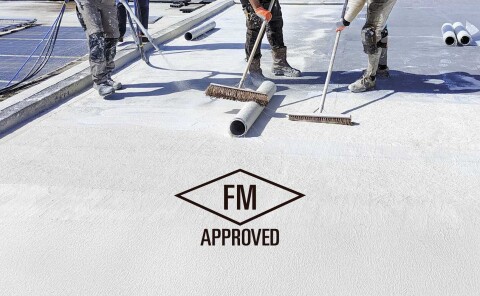
AllShield Blue: A fire-resistant coating applied directly on the waterproofing layer, making existing roofs non-combustible.
-
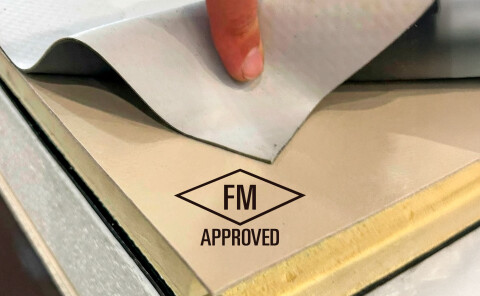
AllShield BarrierSheet: Non-combustible cover boards beneath the waterproofing, ideal for new builds or major refurbishments.
You can use either solution depending on the project situation. Both ensure that the roof beneath the solar installation is non-combustible. This means that even if something goes wrong in the PV system (and it often does) the fire self-extinguishes instead of spreading across the entire roof.
Because the risk of fire escalation is removed, regular costly inspections can largely be skipped, significantly reducing the lifetime cost of the PV installation. We do, however, advise a thorough inspection at year 12, since international data shows that many components, especially connectors and cabling, begin to fail around this point.
Our roof fire 🔥 protection solutions
Fire safety is the goal, insurability is the result
Flat roofs – especially those with solar panels – face an increasing fire risk. Even the best fire-retardant membranes offer limited protection against flying sparks or thermal ignition beneath PV panels. That’s why AllShield developed two non-combustible fire protection systems, each tailored to a specific application.
Do you have any questions for us?
We're here for you!
