
Discover our solutions for fully fire-safe 🔥 roofs
15-9-2025
ZAG Confirms: AllShield Stops Solar Roof Fires
Electrical faults in PV are inevitable — but roof fires are not. ZAG testing proves: with AllShield BarrierSheet, even old combustible roofs become non-combustible, safe, and insurable for solar.
Independent ZAG report compares performance of lightweight non-combustible sheets in PV-related fire tests
In August 2025, the ZAG Institute (Slovenia) published the report “Performance comparison of lightweight non-combustible sheet in rooftop PV-related fires.” Commissioned by AllShield, the study addressed a crucial question: what happens when a fire starts beneath a PV installation — and how effective is a non-combustible barrier sheet in stopping fire penetration?
Background: PV faults are inevitable
Over the 25-year lifetime of a PV system, electrical failures cannot be avoided. Connector faults, defective diodes, cable damage — these small errors can all ignite. Whether a minor fault escalates into a full roof fire depends entirely on the roof buildup. If combustible insulation or membranes are present, flames spread quickly and insurers face catastrophic losses.
The ZAG test program
ZAG tested four representative commercial roof buildups, each fitted with AllShield BarrierSheet directly beneath the membrane. To ensure severe conditions, enlarged wood cribs were used — producing heat release rates up to ~40 kW, far above the standard PV fire test sources.
-
Both PVC and bituminous membranes were tested.
-
Insulations included EPS and PIR (60 mm and 120 mm).
-
Measurements covered flame spread, temperature development, and damage assessment.
Key findings
The results were clear:
-
Flame spread was confined to the PV area. No test showed flame penetration into deeper roof layers.
-
AllShield BarrierSheet consistently blocked direct flame penetration, even under extreme ignition sources.
-
EPS melted and PIR deformed, but critical structural layers remained intact. Thicker PIR (120 mm) resisted deformation better than thin PIR.
-
Visual cues such as white steam (evaporation) and yellow smoke (PIR decomposition) confirmed real-time protective action.
-
Temperature data showed peaks of up to 800 °C directly under the BarrierSheet, while deeper layers stayed near room temperature.
Practical application of BarrierSheets
The essential takeaway: with BarrierSheet, it no longer matters how combustible the roof is underneath — it will not ignite.
On existing roofs
-
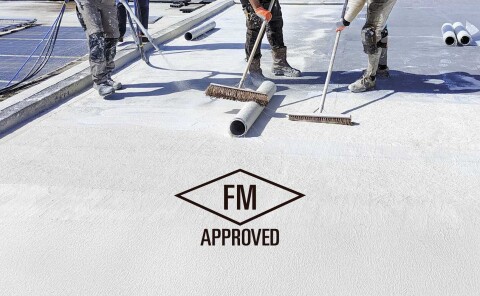
Retrofit without demolition – BarrierSheets can be installed directly on top of existing bitumen or plastic membranes, then covered with a new waterproofing layer or coating.
-
Keep existing insulation – Even highly combustible EPS or PUR can remain in place; the BarrierSheet ensures these layers never fuel a fire.
-
PV-ready upgrade – Old, combustible roofs can still host insurable PV systems after a BarrierSheet upgrade.
On new builds
-
Installed beneath the membrane – BarrierSheets are placed above insulation and below PVC, TPO, or bitumen membranes.
-
Compatible with standard insulations – PIR, EPS, or mineral wool can all be used safely when protected by the BarrierSheet.
-
Flexible installation – Mechanically fastened or adhered, depending on design and wind-load requirements.
What this means for roof owners and insurers
The ZAG report confirms what risk managers already know: inspections alone are not enough. Electrical faults will happen — but they don’t have to become disasters.
-
With a non-combustible layer, any commercial roof becomes functionally non-combustible.
-
PV installations become both safe and insurable.
-
Companies can combine renewable energy generation with business continuity and reduced risk.
Download the full report
The ZAG report “Performance comparison of lightweight non-combustible sheet in rooftop PV-related fires” is now available for download.
About AllShield BarrierSheet
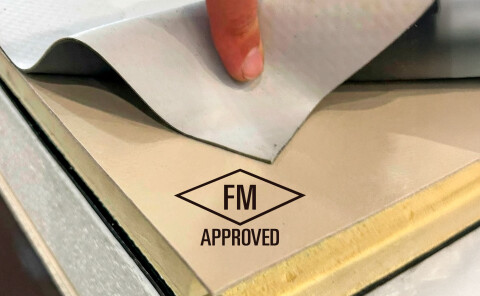
AllShield BarrierSheet is a lightweight, mineral cover board installed directly under the roof membrane. It forms a non-combustible layer that stops flames from reaching combustible insulation or membranes beneath. Proven by ZAG and certified to international standards, it makes large-scale PV installations on commercial roofs safe, sustainable, and fully insurable.
Our roof fire 🔥 protection solutions
Fire safety is the goal, insurability is the result
Flat roofs – especially those with solar panels – face an increasing fire risk. Even the best fire-retardant membranes offer limited protection against flying sparks or thermal ignition beneath PV panels. That’s why AllShield developed two non-combustible fire protection systems, each tailored to a specific application.
Do you have any questions for us?
We're here for you!
