
Discover our solutions for fully fire-safe 🔥 roofs
2-9-2025
Why PV inspections alone cannot stop fires on roofs with solarpanels
Inspections such as the UK’s IET Code of Practice or the US NEC improve PV safety. But none of them can prevent every incident over 25 years. Only a non-combustible roof ensures that a small PV fault never becomes a catastrophic fire.
Why PV Inspections Alone Cannot Stop Solar Roof Fires
Across the UK, US, Europe and beyond, insurers and regulators demand PV system inspections to reduce fire risk. These frameworks are valuable: they find faults early and reduce short-term risk.
Key frameworks include:
- IET Code of Practice for Grid-Connected Solar PV Systems (UK): Commissioning, wiring, protection devices, periodic testing.
- NFPA 70 / National Electrical Code (NEC, USA): Requirements for arc fault protection, disconnects, and wiring safety.
- IEC 62446-1 (International): Commissioning and maintenance tests — insulation resistance, polarity, string performance.
- Scope 12 (Netherlands, NTA 8220): Visual inspection of connectors, DC isolators, thermography, and earthing.
- VdS 3145 (Germany): PV fire safety guideline developed by VdS Schadenverhütung.
- RGIE/AREI 2020 (Belgium): Electrical safety checks, thermography, insulation resistance.
- UTE C15-712-1 / Consuel (France): Mandatory PV inspection covering wiring and protective devices.
- AS/NZS 5033 (Australia): Strict rules on rooftop isolators, cable routing and labeling.
Inspections reduce the likelihood, but do not eliminate the consequences. If the roof build-up is combustible, even a single small mistake can escalate into a large-scale roof fire.
Why inspections of roofs with PV are not enough
Even the best frameworks cannot remove the fundamental risk:
- 25+ year lifetime: Connectors, plastics, and cabling inevitably degrade.
- Intermittent faults: Some arcs or hot spots appear only under certain conditions.
- Gaps between checks: Inspections are periodic; failures can develop the day after.
- Human error: Poor workmanship or mismatched connectors can slip through.
Inspections reduce probability — but they cannot eliminate consequences. If the roof beneath is combustible, even a single arc fault can escalate into a roof-wide fire.
From fault detection to fire containment
Risk engineers know prevention is never perfect. Containment is equally vital.
- Combustible roofs (bitumen, EPS, PIR): Once insulation ignites, flames can spread laterally across thousands of square meters.
- Non-combustible roofs: Ignition remains localised, and the fire self-extinguishes once the faulty component burns out.
This is why insurers in both Europe and the US are now demanding non-combustible cover boards or coatings beneath PV systems — not just electrical inspections.
AllShield’s proven fire proof solutions
AllShield delivers exactly this missing layer of protection:
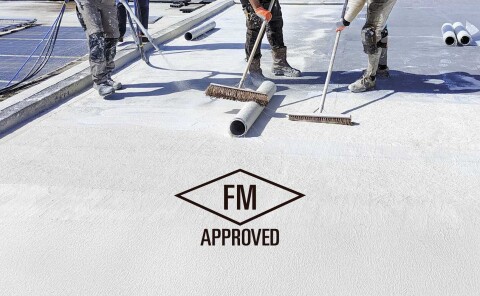
- AllShield Blue – a liquid-applied mineral coating that transforms Class B roofs into non-combustible surfaces.
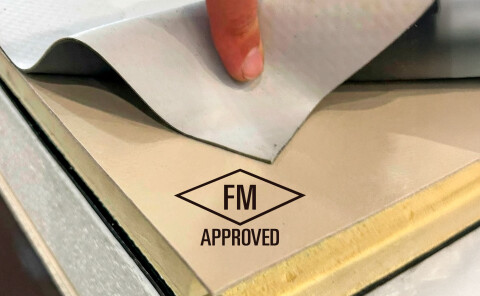
- AllShield BarrierSheet – an A1 mineral board beneath membranes, preventing fire from ever reaching insulation.
Both have been independently tested at ZAG and under NEN 7250:2021, showing that PV fires self-extinguish and flames do not propagate.
Inspections help, but non-combustible roofs are decisive
Inspections such as the IET Code of Practice (UK), NFPA 70/NEC (US), Scope 12 (NL), VdS 3145 (DE), and IEC 62446-1 (International) are essential. They improve system reliability and reduce immediate risks.
But inspections cannot prevent every fault over a system’s 25-year lifetime.
The only way to guarantee that a PV fault never escalates into a catastrophic roof fire is to combine inspections with non-combustible roofing systems.
With AllShield Blue and BarrierSheet, building owners and insurers gain functional non-combustibility — the decisive protection that makes solar roofs safe and insurable worldwide.
Our roof fire 🔥 protection solutions
Fire safety is the goal, insurability is the result
Flat roofs – especially those with solar panels – face an increasing fire risk. Even the best fire-retardant membranes offer limited protection against flying sparks or thermal ignition beneath PV panels. That’s why AllShield developed two non-combustible fire protection systems, each tailored to a specific application.
Do you have any questions for us?
We're here for you!
