
Discover our solutions for fully fire-safe 🔥 roofs
10-9-2025
Negotiating Away Insurers’ Requirements for PV Roofs. Who benefits?
Some insurers exclude PV on combustible roofs—not to block renewables, but because the risks are real. A policy without prevention is an illusion of safety. Facts show: ~1% of building fires involve PV; models predict 29 fires/GW/year. The solution: PV only on non-combustible roofs.
The energy transition is in full swing. Companies increasingly see their rooftops as the perfect location for solar panels: lower energy bills, a sustainable profile, and a contribution to climate goals. But alongside this promise comes a risk that cannot be ignored: fire safety.
Insurers recognize this risk and respond by tightening their conditions. More often, coverage is refused unless the roof is non-combustible—or in some cases, commercial roofs with PV are not insurable at all. Business owners may see this as strict, and insurance brokers try to negotiate these requirements away. At first glance, this seems attractive. But the real question is: who truly benefits?
Why insurers impose stricter requirements
Insurers are not trying to block the transition to renewable energy. Their policies are based on hard facts. Research shows that PV systems are regularly involved in building fires.
A Dutch analysis of 10,000 building fires revealed that around 1% of them involved solar panels on the building. That may sound small, but it equates to hundreds of incidents—enough to force insurers to adjust their risk models.
International scientific analysis (Fault Tree Analysis, Mohd et al. 2022) calculated an average of 29 fires per installed gigawatt of PV per year. With today’s installed capacity in the EU, this translates into tens of thousands of PV-related fires annually. These are no longer isolated cases, but a structural risk insurers cannot ignore.
The role of the insurance broker
Business owners who want to install PV call their broker: “Can you arrange this for me?” And often, the broker succeeds in finding an insurer willing to provide a policy without the strict requirements of others.
On paper, this looks like a success. The entrepreneur gets the solar panels, the policy is signed, everyone seems satisfied. But in reality, this is not a long-term solution. The risks remain unchanged. And when a fire does occur, the consequences reach far beyond material damage—they threaten the company’s very survival.
The consequences of a roof fire
A rooftop fire has devastating consequences. Even with insurance, around half of affected businesses go bankrupt within two years. This isn’t because policies are weak, but because an insurance payout cannot restore lost customers, damaged reputation, or months of halted production.
For the entrepreneur, a policy without preventive requirements offers only the illusion of security. It provides paperwork and confidence, but does nothing to reduce the chance of a fire wiping out the business.
Who actually wins?
Let’s look honestly at the interests:
- The entrepreneur wants renewable energy and continuity. If requirements are negotiated away, they get PV and a policy, but remain exposed to the real risk of losing everything in a fire.
- The insurer wants acceptable risks. If requirements are softened, the risk increases, often compensated by higher premiums or restrictive clauses.
- The broker wants to please the client and secure a policy. But by downplaying requirements, they deliver a short-term fix with no real protection.
The outcome: no one truly benefits. What looks like a clever negotiation often ends up as a missed opportunity to safeguard the client’s business continuity.
Insurance means prevention as well
Insurance is not about sitting back and waiting for payout—it is about making disasters manageable. That includes reducing the chance of catastrophe in the first place. Prevention is part of insurance.
That is why insurers require non-combustible roofs. These demands are not excessive, they are essential. They ensure that, if ignition occurs, the fire cannot spread through the roof structure itself. By negotiating these requirements away, this principle is undermined: the risks remain, and the policy offers little to protect continuity.
Everyone wants the same outcome
No one—entrepreneur, insurer, or broker—wants a fire. Everyone wants businesses to transition to renewable energy safely. That is only possible if solar panels are installed on a roof that cannot itself burn.
For the entrepreneur, this means the investment won’t end in disaster. For the insurer, it means risks are acceptable and sustainable. For the broker, it means they deliver real value, not paperwork but genuine protection.
Call to action
We must stop treating fire safety requirements as obstacles. They are not there to block solar, but to protect businesses from the harsh reality of fire.
An insurance policy without prevention is not protection—it is an illusion. Anyone who truly acts in the best interest of entrepreneurs ensures that PV is only installed on roofs that cannot burn. This is not a limitation, but the only way to unite sustainability and business continuity.
Our roof fire 🔥 protection solutions
Fire safety is the goal, insurability is the result
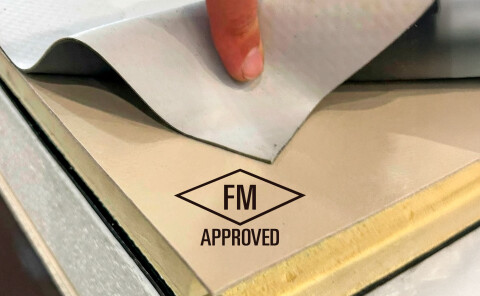
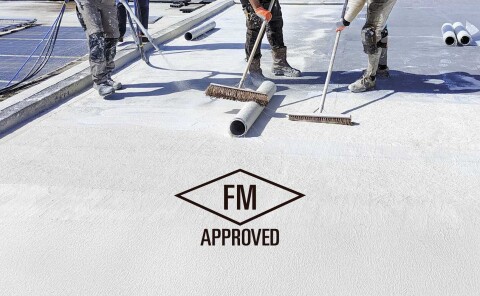
Flat roofs – especially those with solar panels – face an increasing fire risk. Even the best fire-retardant membranes offer limited protection against flying sparks or thermal ignition beneath PV panels. That’s why AllShield developed two non-combustible fire protection systems, each tailored to a specific application.
Do you have any questions for us?
We're here for you!
